
How to Care for an Embroidered T-Shirt at Home
Most embroidered t-shirts are not ruined by wear — they are ruined by one wrong wash. Here is exactly how to wash, dry, and iron yours so the stitching stays perfect for years.
Embroidery is stitched into the fabric, not printed on top of it — which means it can last decades if you treat it right. The thread does not crack, peel, or fade the way screen printing does. But machine embroidery does have one weakness: rough handling in the wash.
Most embroidered t-shirts that lose their shape do so in the first few washes, not after years of wear. This guide covers exactly what to do — and what not to do — to keep your embroidered t-shirt looking as good in three years as it does today.
Before You Wash — 3 Things to Check
Check the care label. Every Luxureign t-shirt is 100% pure cotton with machine embroidery. The general rules in this guide apply to all pure cotton embroidered t-shirts, but always check the label on your specific garment first.
Check for loose threads. Before washing, run your fingers lightly over the embroidery. If you feel any loose or pulled thread, secure it before the t-shirt goes into water. Washing a loose thread tangles it further and can unravel stitching from the edge of the design.
Turn it inside out. Always. This single step protects the embroidery thread from direct friction in the wash — it is the most important thing you can do before washing an embroidered garment.
How to Wash an Embroidered T-Shirt
Hand Washing (Recommended)
Hand washing is the safest method for any embroidered garment. It takes five minutes and eliminates the main risks from machine washing — agitation, spin cycles, and friction against other clothes.
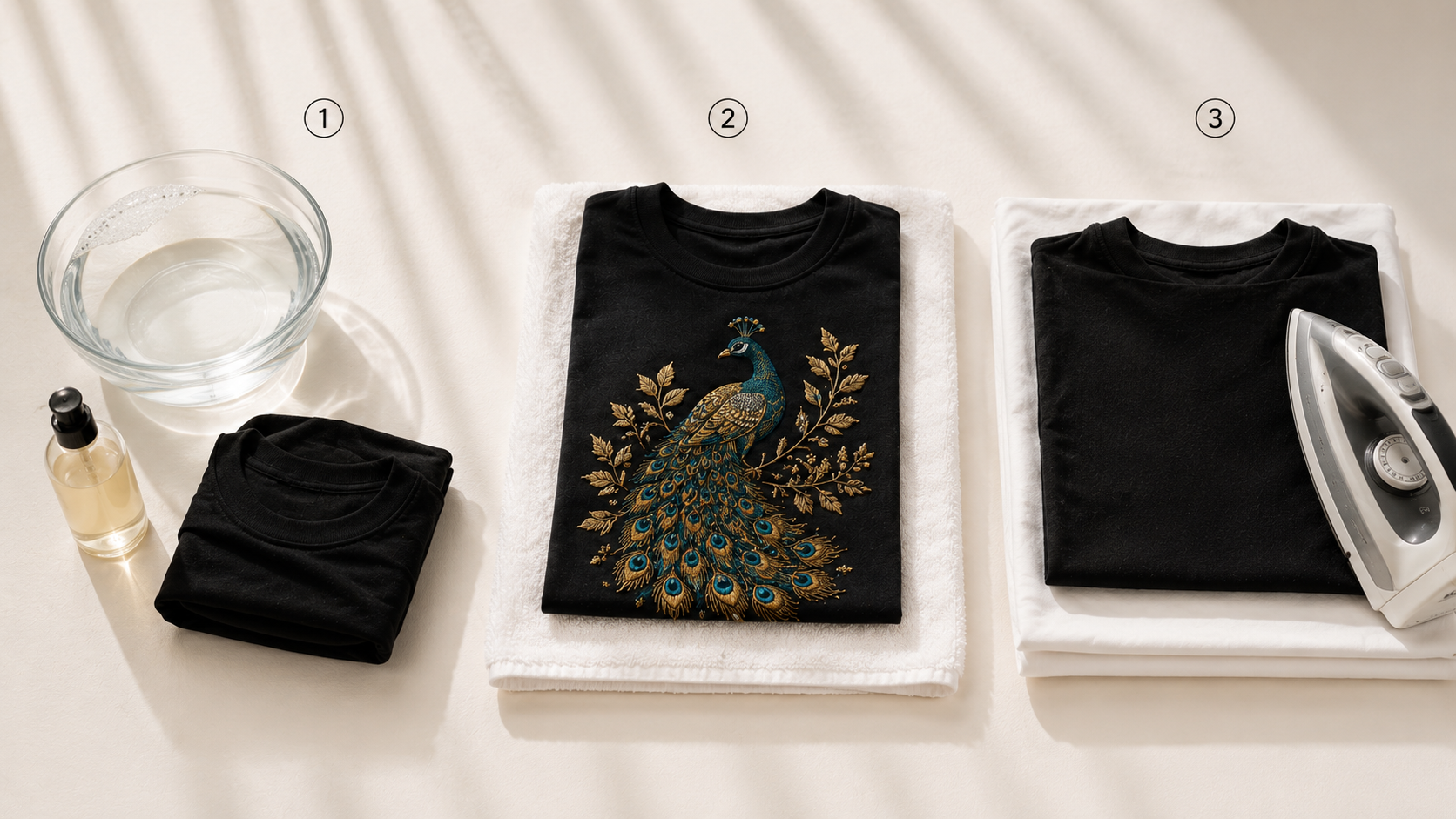
Step 1: Fill a basin with cold or lukewarm water. Never hot — hot water shrinks cotton and weakens thread tension over time.
Step 2: Add a small amount of mild liquid detergent. Avoid detergents with bleach, enzymes, or optical brighteners — these break down thread colour faster than regular washing does.
Step 3: Submerge the t-shirt inside out and gently move it through the water. Do not scrub the embroidered area. Do not wring or twist the fabric.
Step 4: Rinse thoroughly in clean cold water until no detergent remains. Soap residue left in cotton stiffens the fabric over time.
Step 5: Press water out gently by folding the t-shirt and applying light pressure. Never wring.
Machine Washing (If Necessary)
Machine washing works if you follow these rules carefully:
Turn inside out. Always — this is non-negotiable for embroidered garments in a machine.
Use a mesh laundry bag. Place the t-shirt inside a mesh washing bag before putting it in the machine. This prevents the embroidery catching on zips, buttons, or other garments during the cycle.
Cold water only. Select the coldest wash setting available — 30°C maximum. Most machines have a "delicate" or "hand wash" cycle. Use it.
Mild detergent, small amount. Same rule as hand washing — no bleach, no enzyme detergents, no fabric softener directly on the embroidery area.
No spin cycle. If your machine allows you to skip or reduce the spin, do it. High spin cycles pull cotton and stress embroidery thread anchors at the fabric edge.
What Never to Do in the Wash
| ❌ Never Do This | Why It Damages Embroidery |
|---|---|
| Hot water wash | Shrinks cotton, weakens thread tension and colour |
| Washing right side out | Friction directly on threads causes pilling and snags |
| Bleach or harsh detergent | Fades thread colour and weakens fibre structure |
| Wringing or twisting | Distorts embroidery shape and pulls anchor stitches |
| Washing with rough fabrics | Denim zips and buttons snag embroidery thread |
| High spin cycle | Stresses thread anchors and distorts cotton shape |
How to Dry an Embroidered T-Shirt
Air dry only. Lay the t-shirt flat on a clean dry towel or hang it on a wide hanger in a shaded spot. Direct sunlight fades both the cotton base and the embroidery thread over time — shade drying is always better.
Never tumble dry. The heat and tumbling action of a dryer is the fastest way to shrink pure cotton and distort embroidery. Even a single dryer cycle at high heat can permanently change the shape of the embroidery design.
Reshape while damp. Gently smooth the embroidered area with your fingers while the t-shirt is still slightly damp. This keeps the design lying flat as the fabric dries rather than puckering.
How to Iron an Embroidered T-Shirt
Ironing an embroidered t-shirt the wrong way is the single most common way people damage their garments — usually by ironing directly over the embroidery with a hot iron.
Always iron inside out. Turn the t-shirt inside out completely before ironing. This means the iron never touches the embroidery thread directly.
Use a pressing cloth. Place a clean cotton cloth or thin towel between the iron and the fabric, even when ironing inside out. This distributes heat evenly and prevents shine marks on dark cotton.
Low to medium heat only. For 100% pure cotton use the cotton setting on your iron — but reduce it slightly when working near the embroidered area. Embroidery thread is typically polyester, which melts at temperatures lower than cotton can handle.
Never iron directly on the embroidery. If the embroidery area is creased, turn the t-shirt right side out, place it embroidery-face-down on a thick towel, and press from the wrong side. The towel absorbs the embroidery's raised texture and the iron presses the cotton flat without crushing the design.
Use steam carefully. Steam helps relax cotton creases without requiring high direct heat. Hold the iron slightly above the fabric and let the steam do the work near embroidered areas rather than pressing down.
Storage Tips
Fold, do not hang long-term. Hanging a cotton t-shirt on a narrow hanger for months stretches the shoulders and collar. Fold and store flat in a drawer or shelf.
Store clean. Never store an embroidered t-shirt with any stain or residue on it. Stains set into cotton over time and become permanent. Sweat residue also weakens thread colour when left for months.
Keep away from sharp objects. Embroidery thread can snag on jewellery, bag clasps, or rough surfaces. Store separately from accessories that could catch the thread.
Quick Care Reference
| Step | Do This | Avoid This |
|---|---|---|
| Before washing | Turn inside out, check for loose threads | Washing right side out |
| Water temperature | Cold or lukewarm (max 30°C) | Hot water |
| Detergent | Mild liquid, small amount | Bleach, enzyme detergents |
| Machine wash | Delicate cycle, mesh bag | High spin, normal cycle |
| Drying | Flat air dry in shade | Tumble dryer, direct sun |
| Ironing | Inside out, pressing cloth, low heat | Direct iron on embroidery |
| Storage | Fold flat, store clean | Hanging long-term, storing dirty |
Frequently Asked Questions
Can I machine wash an embroidered t-shirt?
Yes, with the right settings. Turn it inside out, place it in a mesh laundry bag, use cold water on a delicate cycle with mild detergent, and avoid high spin. Hand washing is always safer but machine washing works if you follow these steps.
Will embroidery fade after washing?
Good quality fade-resistant polyester embroidery thread does not fade significantly with proper cold water washing. What causes thread colour loss is hot water, bleach-based detergents, and direct sunlight drying — all of which are avoidable.
How do I iron an embroidered area without damaging it?
Turn the t-shirt inside out, place it embroidery-face-down on a thick towel, and iron from the wrong side on low to medium heat with a pressing cloth. Never press a hot iron directly onto the embroidery from the front.
How often should I wash an embroidered t-shirt?
Wash it as often as you would any cotton t-shirt — after each wear in Indian summers. Frequent gentle washing is far less damaging than infrequent rough washing. The key is method, not frequency.
Can I dry clean an embroidered t-shirt?
Dry cleaning is safe for embroidered garments but unnecessary for pure cotton t-shirts. The solvents used in dry cleaning are gentle on thread and fabric — but cold hand washing achieves the same result for a fraction of the cost.